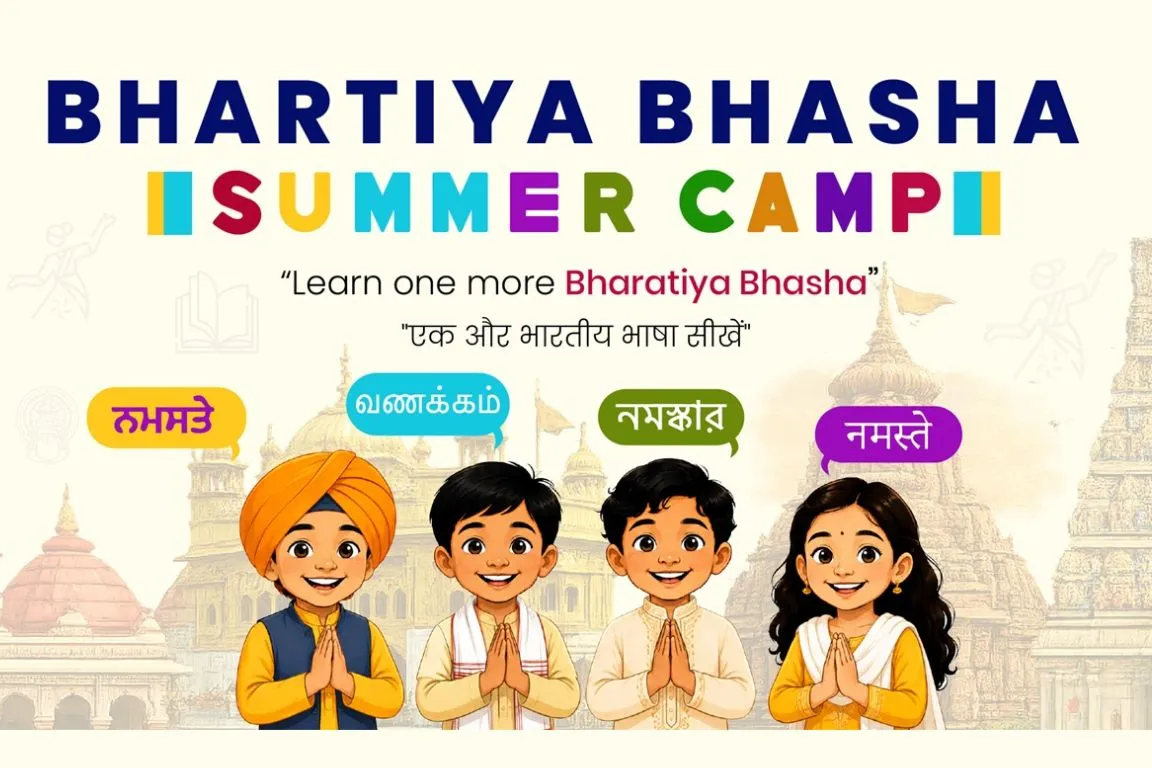
CBSE has launched a new summer camp initiative to promote Indian languages and cultural learning among students. Schools will organise fun and activity-based sessions during summer vacation.
CBSE Board has issued a notice related to the Bharatiya Bhasha Summer Camp (BBSC) 2026 which all students and teachers should know about.
CBSE has issued a very important circular regarding the organisation of Bharatiya Bhasha Summer Camp 2026 in affiliated schools across the country. The Board released this notification on 13 May 2026.
 Join Our WhatsApp Channel
CBSE has launched this initiative under the goals of the National Education Policy (NEP) 2020. The Board wants students to learn one more Indian language through fun and interactive activities during summer vacation.
What Is Bharatiya Bhasha Summer Camp 2026?
CBSE has designed the Bharatiya Bhasha Summer Camp to promote the spirit of “Learn One More Bharatiya Bhasha.” The camp will help students explore different Indian languages, cultures, and communication styles. Students will also develop basic conversational skills in a language other than their mother tongue.
The nationwide initiative aims to celebrate India’s linguistic diversity and promote multilingualism among school students in alignment with NEP 2020 and the vision of Viksit Bharat 2047.
How Will Schools Organise the Summer Camp?
CBSE has advised schools to conduct the camp in physical mode for nearly 28 hours. Schools can organise sessions for 2 hours daily for 7 days during summer vacations or through weekend and after-school classes.
The Board has also asked schools to appoint one nodal teacher for planning and organising daily activities. Schools can choose any Indian language based on student interest, local culture, and resource availability.
Important Details About CBSE Bharatiya Bhasha Summer Camp 2026
| Key Information | Details |
|---|---|
| Circular Number | Acad-30/2026 |
| Circular Date | 13 May 2026 |
| Initiative Name | Bharatiya Bhasha Summer Camp 2026 |
| Organised By | CBSE |
| Based On | NEP 2020 |
| Camp Duration | 28 Hours |
| Daily Timing | 2 Hours for 7 Days |
| Mode | Physical Mode |
| Main Objective | Learn One More Bharatiya Bhasha |
What Activities Will Students Do During the Camp?
CBSE has shared a complete day-wise activity plan for schools. Students will participate in language games, role play activities, cultural learning, storytelling, music, dance, quizzes, and local cuisine activities.
Suggested Day-Wise Activities
| Day | Main Activity |
|---|---|
| Day 1 | Greetings, alphabets, numbers, and expressions |
| Day 2 | Real-life conversations and virtual city tours |
| Day 3 | Music, dance, painting, and local art |
| Day 4 | Local cuisines and traditional dishes |
| Day 5 | Films, storytelling, puppetry, and culture learning |
| Day 6 | History, geography, rivers, mountains, and monuments |
| Day 7 | Traditional games, quiz, and certificate distribution |
Who Can Support the Summer Camp Activities?
CBSE has encouraged schools to involve language teachers, parents, volunteers, alumni, NGOs, local experts, art teachers, music teachers, and special educators in the programme. Schools can also use PM e-Vidya and NCERT learning resources during the camp.
Connect with us on WhatsApp
Read This Too : CBSE Invites Student Entries for June 2026 Edition of Sapnon Ki Udaan E-Magazine – Participate Now
What Instructions Did CBSE Give for Student Safety?
CBSE has instructed schools to follow all local administration guidelines related to heat waves and summer conditions. Schools must arrange proper drinking water and ensure the safety and security of all participants during the camp.
Will Schools Introduce Indian Sign Language?
Yes, CBSE has encouraged schools to introduce students to Indian Sign Language (ISL) with the help of NIOS resources, PM e-Vidya content, NGOs, and special educators wherever possible.
Why Has CBSE Started This Language Initiative?
CBSE wants to celebrate India’s linguistic diversity and cultural richness through joyful learning experiences. The Board believes that multilingual learning will strengthen communication skills, cultural understanding, and national integration among students.