Discover how a progressive principal balances academics, well‑being, NEP 2020, teacher growth and parental support to build truly future‑ready students.
In today’s rapidly changing education landscape, the role of school leaders has become more dynamic than ever. From rebuilding learning systems after the pandemic to embracing NEP 2020 reforms, principals now shoulder the responsibility of shaping future-ready schools.
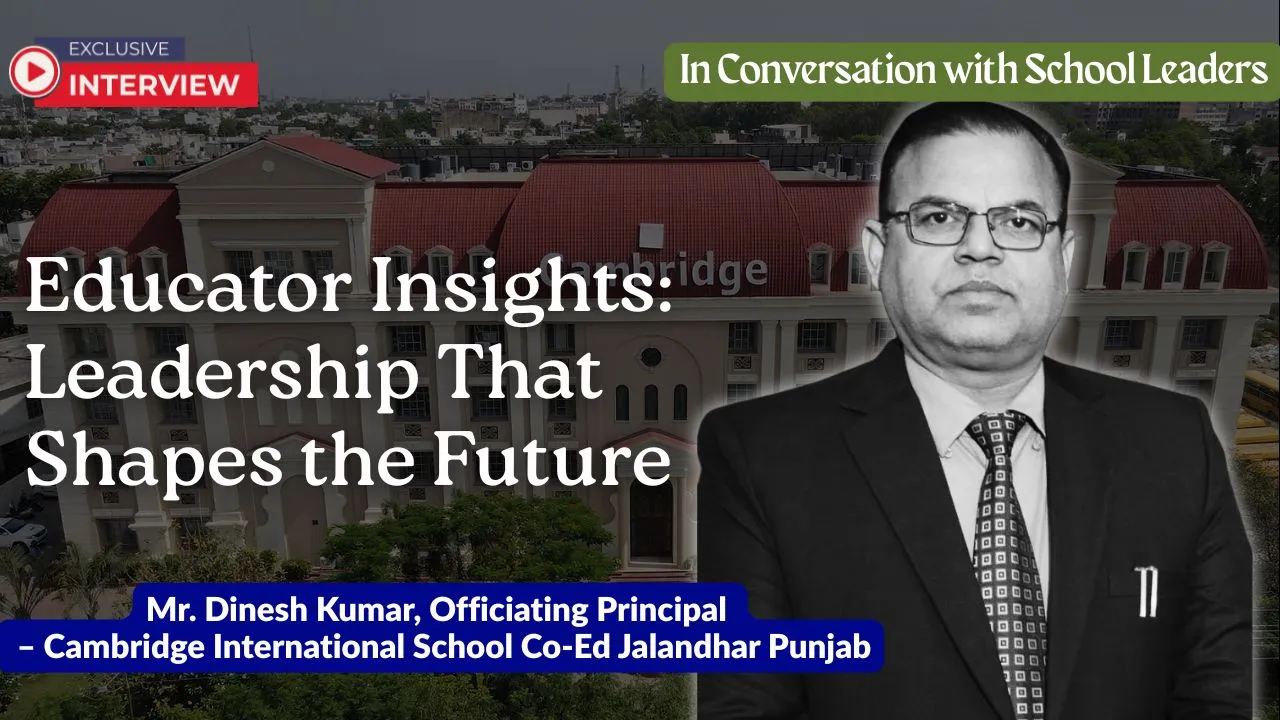
Exclusive Interview with Mr. Dinesh Kumar
To understand these shifts more closely, we spoke with Mr. Dinesh Kumar, Officiating Principal of Cambridge International School Co-Ed, Jalandhar, Punjab. With 24 years of experience in teaching and leadership, he shares thoughtful insights on leadership, holistic education, parental expectations, teacher development, and the evolving needs of students.
 Join Our WhatsApp Channel
1. How has your understanding of school leadership evolved over the years, especially after the pandemic and NEP 2020 reforms?
My understanding of leadership has shifted from simply handling administrative tasks to nurturing a positive learning environment and working towards a unified school vision. The pandemic taught us to be flexible and tech-savvy, so I now focus on enabling innovation, supporting teacher growth, and preparing children to be future-ready.
2. What core principles guide your decisions as a principal when it comes to children, teachers, and academic culture?
My decisions are guided by principles aligned with the school’s vision. I strongly believe in cultivating a robust academic culture that prioritises 21st-century skills while respecting diverse talents and learning styles.
3. What does “holistic education” mean to you in the daily functioning of a school?
For me, holistic education means preparing students for life by shaping well-rounded individuals. It ensures learning is meaningful and connected to real-life situations, helping children understand the world beyond textbooks.
4. How can schools balance academic expectations with emotional well-being?
Schools can maintain this balance by encouraging open communication, integrating social-emotional learning, and providing regular counselling sessions. These interactions help us understand students better and support their emotional needs.
5. What is one thing students need less of today, and one thing they need more of?
Students today need less exposure to social media and more opportunities for self-exploration, questioning, and creative learning.
6. How do you support your teachers in adapting to new pedagogies and technologies?
We support teachers through continuous professional development programs, hands-on workshops, and regular training sessions. These platforms help them understand diverse learning needs and learn collaboratively.
7. What shifts have you observed in parental expectations in the last decade?
Parents today are more informed, more involved, and expect continuous updates about their child’s progress. There is a growing emphasis on both holistic development and academic excellence.
Connect with us on WhatsApp
8. How can parents contribute meaningfully to their child’s learning without adding pressure?
Parents can support their children by being patient, spending quality time with them, encouraging participation, and focusing on progress rather than comparison. Timely communication between teachers and parents also plays a crucial role.
9. How is your school implementing NEP 2020 in practical ways?
We are implementing NEP 2020 by promoting experiential and project-based learning, incorporating skill-based modules, adopting flexible assessments, and encouraging multilingual practices.
About the Educator
Mr. Dinesh Kumar – MSc (Physics), B.Ed. (24 years of experience).
Officiating Principal – Cambridge International School Co-Ed, Jalandhar, Punjab
Follow BureauOfInvestment.com for the latest education news and updates on exam results, admit cards, board schedules, admissions, scholarships, and new education policies. For editorial inquiries, please contact our news team at news@bureauofinvestment.com